December 2
Interstellar Objects: Unlocking the conditions of planet formation across space and time
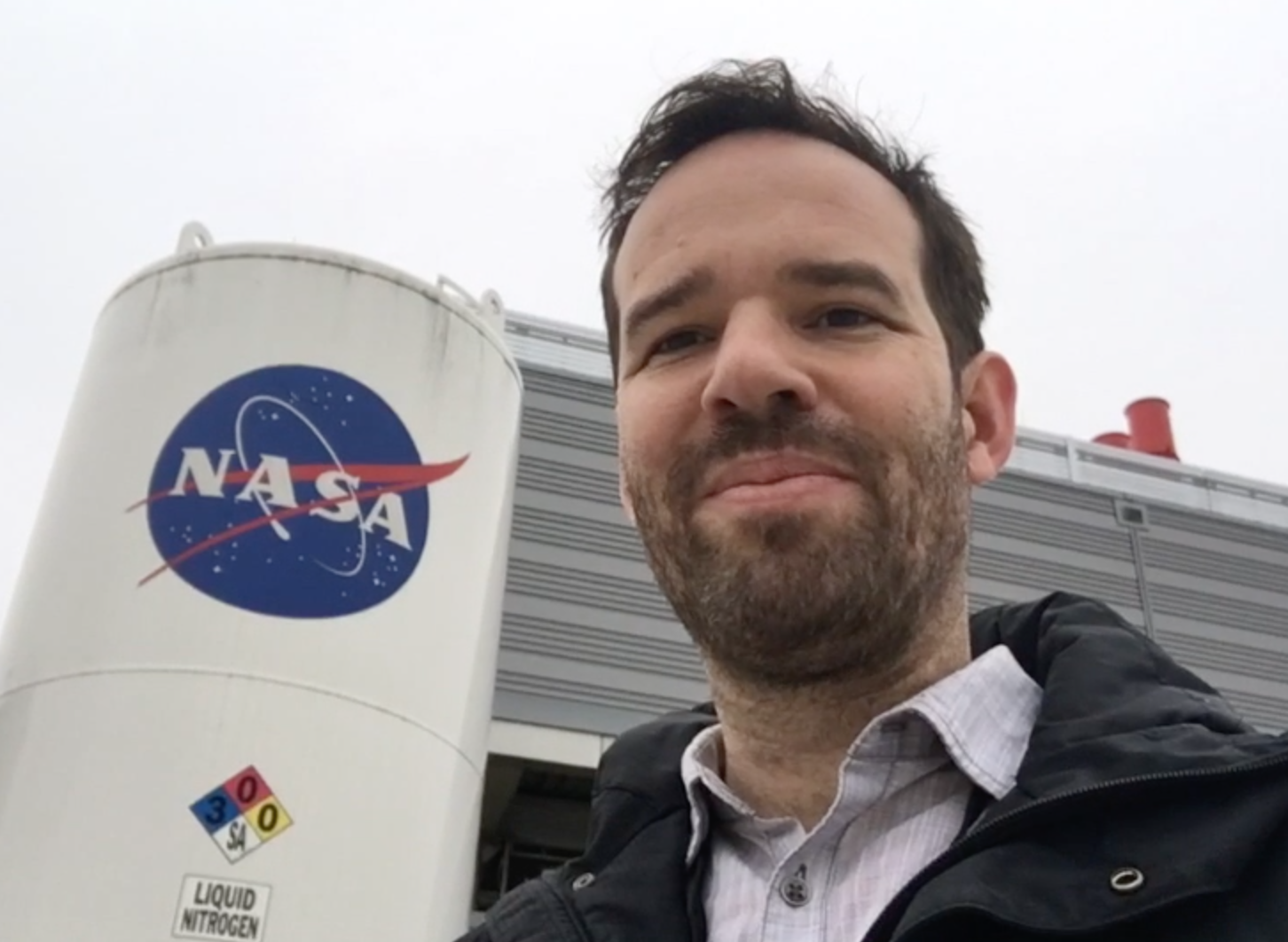
Speaker: Martin Cordiner, Research Associate Professor in Planetary Science and Astrochemistry (Catholic University of America and NASA Goddard Space Flight Center)
Abstract: Comets and planetesimals form in large numbers during the birth of planetary systems, and many of these bodies are ejected into interstellar space through gravitational encounters with stars and planets. The recent apparitions of the first confirmed interstellar objects (ISOs) 1I/’Oumuamua, 2I/Borisov and 3I/ATLAS, have provided an unprecedented opportunity to study the composition of materials delivered to us from distant planetary systems, directly revealing the chemical properties of ices from the midplanes of protoplanetary disks other than our own. In this talk, I will summarize our knowledge on the chemical and physical properties of the first three interstellar objects, focusing in particular on new insights from recent observations at infrared and submillimeter wavelengths using JWST and ALMA. Our December 2025 JWST NIRSpec observations, reveal emission lines from an array of gas-phase molecules, including H2O, CO2, CO, CH4, OCS, HCN and CH3OH, as well as atomic nickel vapor and minor isotopologues including HDO, 13CO and 13CO2. The gas mixing ratios demonstrate remarkable temporal evolution of 3I/ATLAS since its discovery in summer 2025. The large abundances of CHONS-bearing species highlight the presence of volatile compounds that could allow complex (potentially pre-biotic) chemistry in its originating system. The observed isotopic ratios are interpreted in terms of the originating system's age, metallicity and irradiation environment.
Host: Dr. Michael Kelley