
April 3
Open Questions and New Insights from the Wide-Field X-ray Monitor Einstein Probe
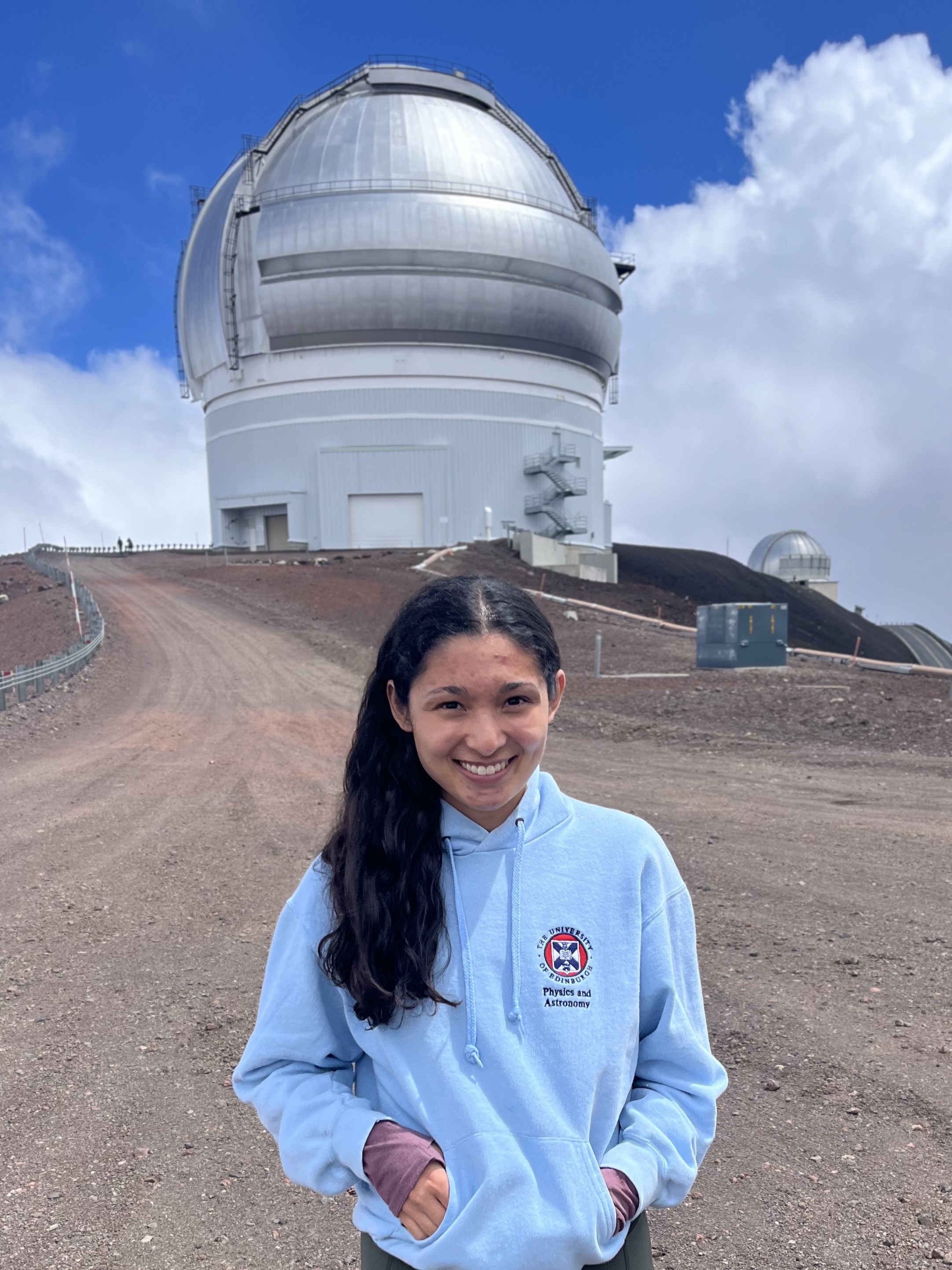
Speaker: Dr. Jillian Rastinejad, UMD Astronomy
Abstract: In the last three decades, the launch of wide-field, high-energy monitors has revolutionized our view of the extraordinary ways that massive stars end their lives. Thanks to wide-field gamma-ray telescopes, we have characterized dozens of broad-lined Type Ic supernovae accompanying gamma-ray bursts (GRBs), informing models for the launch of ultra-relativistic jets following the core-collapse of rapidly-rotating, stripped stars. In addition, a limited sample of serendipitously-discovered fast X-ray transients (FXTs) with supernovae has revealed novel evidence for shock break-out and lower energy jets. The 2024 launch of the wide-field X-ray monitor, Einstein Probe (EP), opens a new window to illuminating the connections between FXTs and supernovae and relating these to the physics of massive star explosions. In this talk, I will show highlight several recent results from follow-up of Einstein Probe events. I will show how our detailed study of the most nearby supernova discovered following an EP FXT, EP 250108a, including a JWST spectrum around peak and observations of broadened Hydrogen several weeks following the FXT, reveal new insight to the final stages of the progenitor star's life. I will conclude by discussing open questions regarding the origins of FXTs and the promise of future sample studies of FXT supernovae.
Host: Robert Stein & Jillian Rastinejad