February 25
The Turbulent Lives of Young Galaxies
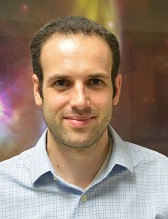
Speaker: Prof. Claude-André Faucher-Giguère, Northwestern University
Abstract: High-resolution galaxy formation simulations predict that high-redshift, low-mass galaxies undergo bursty star formation, with star formation rates that vary at the order-of-magnitude level on short timescales. Over the last few years, largely thanks to the James Webb Space Telescope, observational evidence has mounted that bursty galaxies are common at high redshift. In this talk, I will summarize predictions from the FIRE simulations on how galaxies evolve from bursty, dispersion-dominated systems into steady, disk-dominated galaxies like the Milky Way. I will argue that the bursty phase of galaxy evolution can explain several key JWST observations, including the abundance of bright galaxies during Cosmic Dawn and the evolution of galaxy metallicities at high redshift. Motivated by the central role of bursty star formation in shaping early galaxies, I will outline a new theoretical framework to analytically model bursty galaxies and their circumgalactic medium. Our results suggest that many basic properties of bursty galaxies can be understood in terms of universal properties of supersonic turbulence. This framework provides new insights into the physics of bursty galaxies, such as what sets their star formation efficiency.
Host: Dr. Sylvain Veilleux