
April 17
Polarization variability in Tidal Disruption Events
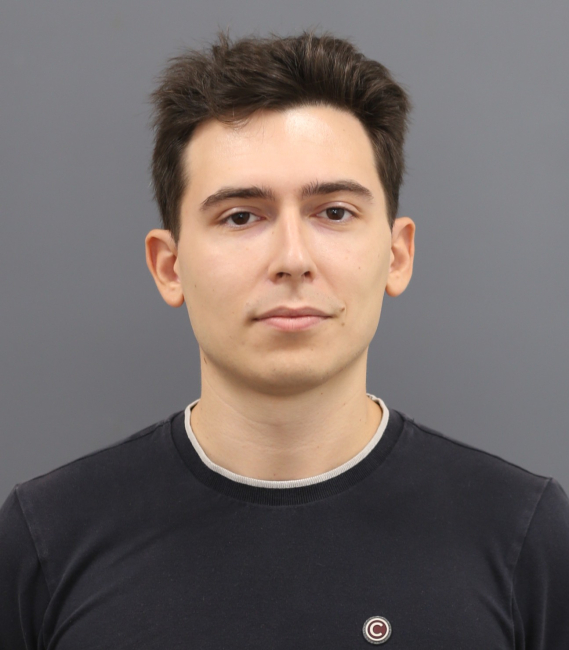
Speaker: Alberto Floris, PhD student, University of Crete
Abstract: Polarimetry of Tidal Disruption Events (TDEs) provides an invaluable diagnostic for the geometry and physical mechanisms driving the accretion flow, potentially distinguishing between competing emission models. Recent observations have revealed that even non-jetted TDEs can be highly polarized (e.g. AT2020mot), raising fundamental questions about emission mechanisms during the early stages of accretion. While stellar stream shocks offer an attractive interpretation, it is not yet clear whether this is a common underlying mechanism.
I will present results from the Black hOle Optical polarization TimE-domain Survey (BOOTES): the first systematic optical polarization survey of TDEs using the Nordic Optical Telescope, the Calar Alto 2.2m telescope, the Skinakas Observatory 1.3m telescope and the Very Large Telescope.
We find a variety of polarization behaviors across our sample. Combined with contemporaneous multi-wavelength data, these trends constrain the geometry and dynamics of the disrupted debris and the nascent accretion flow. In particular, we report time-variable polarization degree and position angle -an effect not previously reported in TDEs- pointing to more dynamic and anisotropic systems than commonly assumed, as well as the possible emergence of jets.
Our results showcase how polarimetric monitoring opens a new window on the mechanisms powering supermassive-black-hole accretion and on the earliest stages of accretion-disk formation, and they provide testable predictions to distinguish shock-powered and reprocessing-dominated models.
Host: Prof Suvi Gezari, Jillian Rastinejad, & Robert Stein