News
News
Filter by
Congratulations to the College's August 2024 Graduates
212 CMNS students graduated from the college in August 2024.
Congratulations to the College's December 2024 Graduates
Over 600 CMNS students graduated in December 2024.

Maryland Aurorae Photos from Big CME
New Study Eases Concerns Over Possible “Doomsday” Asteroid Swarm
UMD astronomer found fewer dangerously large space rocks in Earth’s cosmic neighborhood than previously estimated.
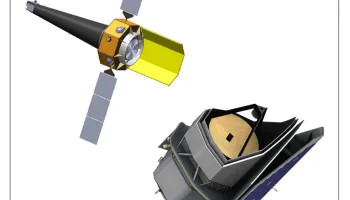
Two UMD Astronomy Space Probes Advance to Next Round of $1 Billion NASA Mission Selection
Proposals from Christopher Reynolds for an X-ray mission and Alberto Bolatto and Jason Glenn for a far-infrared mission are closer to being realized.

For undergraduate student Aneesh Anandanatarajan, learning how to ask the “big questions” about physics and astronomy is both an art and a science.
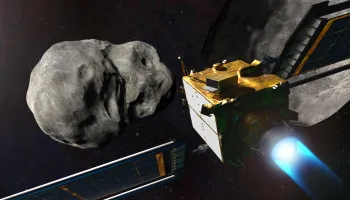
NASA’s DART Impact Permanently Changed the Shape and Orbit of Asteroid Moon
A new study led by Astronomy's Derek Richardson provides insights on the geophysics behind asteroid formation and evolution.

UMD Astronomers Investigate Eternal Darkness and Daylight on Distant World
Researchers found atmospheric differences between the morning and evening sides of exoplanet WASP-39 b.
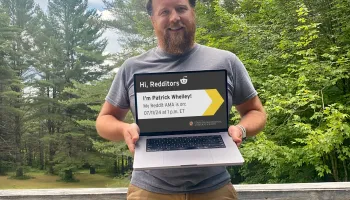
Astronomy Associate Research Scientist Patrick Whelley Answers Questions About the Moon
The College of Computer, Mathematical, and Natural Sciences hosted a Reddit Ask-Me-Anything spotlighting research on the moon's composition.
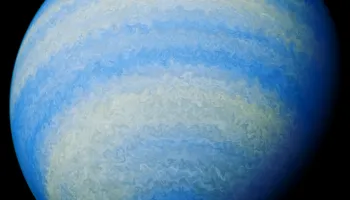
A Nearby Exoplanet Reeks of Rotten Eggs—And That’s a Good Thing
Using the James Webb Space Telescope, UMD astronomers helped sniff out a stinky atmosphere that may offer clues about ‘gas giant’ planets.

Congratulations to the over 3,700 Spring 2024 semester Dean's List awardees from the University of Maryland's College of Computer, Mathematical, and Natural Sciences.
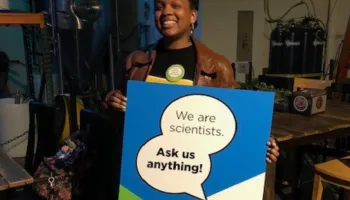
Illuminating Science Through Stellar Research and Outreach
Astronomy Ph.D. student Jordan Ealy was recognized by Diverse: Issues in Higher Education for her promising work on the smallest stars in the universe and her efforts to make science more accessible.